Hello
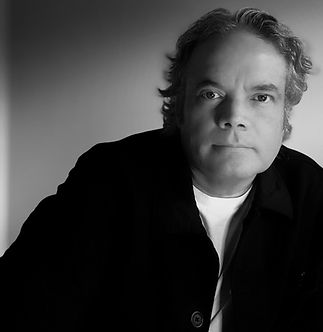
Alejandro Borges (b. Caracas, Venezuela) is an architect based in Texas, where he is Professor of Architecture at Texas A&M University. His hand-drawn mixed-media sections treat architectural space as a site of memory and displacement. Since 2017 his work has entered more than fifty juried exhibitions in New York, Los Angeles, London, Barcelona, Zurich and Caracas, selected by curators from the Metropolitan Museum of Art and the Solomon R. Guggenheim Museum, among others.


I left Caracas in 2014. What remains of it is not a place I can return to but a section — a building cut open, every room visible at once, none of them enterable. That is the form memory takes after displacement, and it is the form I draw.
For more than a decade my work has consisted of hand-drawn mixed-media sections: graphite, ink, watercolor and Prismacolor on board, worked at close range over weeks. The cut is the method, not a convention borrowed from architecture. A section is the only drawing that cannot conceal what a building holds. It exposes the structure and the inhabitant in the same gesture, and it refuses the consolation of a façade.
Four bodies of work proceed from that premise. Archeologies begins with the ruin of a church in Venezuela and sets a contemporary intervention against it, so that the old and new logics remain visibly incompatible; the drawing does not reconcile them. Projections carries the section into dense, invented urban interiors, where stratification and juxtaposition produce a space no single author could have designed. Hybrids pushes architecture toward the biological — high-rises that behave as organisms, parasitic volumes grafted onto existing Manhattan facades, streets thickening into vertical ecologies. Collisions concerns memory itself: how a self is assembled from fragments, and what it represses in the assembling.
Across all four I work with light, shadow, projection and sublimation in both their architectural and psychological senses. Jung's shadow is not a metaphor I apply to these drawings; it is what they are about. A person who has lost a country lives as what I have come to call a living dichotomy — part of you remains in the place that no longer exists, the rest goes on without it. The oppositions the work holds, between order and chaos, individual and collective, conscious and unconscious, are not a theoretical scheme. They describe a condition I know from the inside, and one that millions of other Venezuelans know as well.
I make these drawings by hand, and the insistence is deliberate. Each line carries duration. Smudges, overlaps and erasures remain in the finished work as evidence that a body was present and hesitated. In a period when an image of a city can be generated in seconds, a drawing that takes months proposes a different relation between attention and place. Rust, which recurs throughout the work, does this materially: oxidation is time made visible, memory in the act of being lost.
Zygmunt Bauman described a shift from a solid modernity of stable structures to a liquid one in which nation, community and civilization dissolve. I did not encounter that condition as theory. I encountered it as the country I was born in.
These drawings are not proposals for buildings. They are the only place where the city I left and the cities I have lived in since exist simultaneously and at full weight.
Contact
I'm always looking for new and exciting opportunities. Let's connect.
8176091486